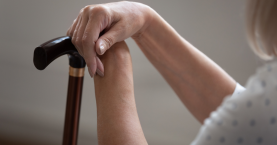
I remember when Mum was alive she was told by her doctor to use a walking stick to help with her hip problem. Well, there was no chance she would agree. My sisters and I all nagged at her but she wouldn't. She was too proud, too self-conscious. She worried about what people would think.
I thought about Mum a lot recently when a friend of mine was told she needed a walking stick following a knee operation. Her first reaction was almost identical to my mum's — absolute refusal. "I'm not using one of those," she said. "I'll look old."
And it got me thinking about how we perceive mobility aids, and why so many people — especially women of a certain generation — feel such resistance to using them.
The truth is, a walking stick is simply a tool. It's no different to wearing glasses when your eyesight needs support, or using a hearing aid when your hearing isn't what it was. It's a practical solution to a practical problem.
But we've somehow attached a stigma to it. We've decided that needing a walking stick means something about who we are — that it signals weakness, or age, or decline. And that stigma can cause real harm, because people who need support but refuse it are putting themselves at risk of falls and further injury.
I'm happy to say my friend came around. It took a few weeks, but she started using her stick and quickly discovered something surprising — she felt more confident, not less. She could walk further. She could stand for longer. She felt safer.
If you're in a similar position, or if someone you love is resisting using a walking stick, I hope this helps. Your health and safety matter far more than what strangers might think. And honestly? Most people don't think anything at all — they're too busy with their own lives.
Use the stick. Take care of yourself. That's what matters.